
"All Dolled Up"
My complex feelings about dressing up and how they relate to becoming a runner (plus a Halloween flashback!)
Before I get to today’s main story, I have some links to share for inspiration. So much happened in ultrarunning news since my last post!
Sarah Perry of the UK set a women’s record for a backyard ultra with 395.8 miles (95 “yards” or loops each 4.16 miles on the hour). This happened at Big’s Backyard Ultra, the race spotlighted in my last post’s book review. Sarah’s Instagram post recapping her experience impressed me because she focused on the spirit of those around her, rather than on personal accomplishment. “There’s something incredibly special about watching so many people you are technically racing against not fighting ferociously to beat you, but instead working with you and genuinely wanting to help you progress. We sometimes couldn’t converse due to language barriers, but kindness proved to be universally understood. … The most profound realisation was the power of shared struggle to forge connection. It’s a space where competition takes a backseat to communal spirit.” Bravo.
At last weekend’s Javelina Jundred, all eyes were on the incredible course record setters. But I was cheering for some of the older competitors in the field, such as former WSER champ Pam Smith who dressed up in a “Peace of Ass” 1960s hippie costume with her butt exposed because “the ‘60s were the start of modern feminism and women’s rights—something we are still fighting for. Plus, so many women struggle to find peace with their own bodies. So to me this was also my little token of empowering women to own their ‘assets’ and keep fighting to be in charge of choices about bodies.” (Read more.)
I also cheered for Stella Springer, who at 54 made the 24-hour World Championship team. Stella set a big PR with 146.4 miles, helping Team USA. I’m going to have Stella on our monthly Zoom conversation for paid subscribers on November 12, and then excerpt our group Q&A for an upcoming newsletter. (If you’d like an invitation to the monthly Zoom plus occasional bonus posts, please upgrade your subscription to the supporter level.)
And lastly, I was pleased and grateful for how Craig Lewis captured my story for his podcast and newsletter. You can access the podcast here or read this summary of our talk.
Why dressing up triggers me
I got all dressed up last Saturday for my nephew’s storybook wedding near Nashville, which called for formal attire.
Let me tell you about my love-hate relationship with dressing up to look pretty, even sexy, and how it relates to why I run.
As my beautiful 27-year-old daughter authoritatively applied my makeup before the wedding ceremony, I closed my eyes and reveled in the role reversal—being cared for by my grown-up girl, submitting to her expertise—and reflected on how the experience felt similar to my big sister making me up when I was awkward and she was my role model who took care of me more than my mother did. In my mind, I traveled back to the Halloween of 1981 when I was 12 and my sister was 19, and she transformed me for a Cinderella-like night in an unforgettable Halloween costume that warped my self-image and priorities for years. (More on that below.)
Even now in midlife, I still carry the geeky girl who struggled to look good and be accepted—the one with a 7th-grade Pat Benatar mullet-gone-wrong that grew outward in a mushroom cloud of layered frizz, tan lines from headgear on her cheeks, thick glasses until getting contacts—who’s unfashionable at the core and feels inadequate trying to dress stylishly or enhance appearance.
I hate shopping for new clothes, unless they’re for running or from the Patagonia store. I normally don’t wear makeup beyond mascara since my eyelashes turned blond-gray. I let my hair dry naturally because blowdrying and ironing its huge volume is almost as unwieldy, unpleasant, and time consuming as taking apart our eco-toilet to clean it (a chore I also did last week, because we have this composting toilet for an outhouse in the woods that needed attention, but that’s another story).
For this wedding, however, I rose to the occasion. I bought an affordable floor-length dress from lulus.com with a floral print and ruffles for a Southern vibe. I booked a date with my daughter, sister-in-law, and niece at a blow-out bar so we all could get our hair done together. I asked my daughter to get some false eyelashes and stick them on my lids because there’s no way I could do it myself.
By 5 p.m. Saturday, I had transformed into a smokey-eyed, smooth-haired hot mama—and I liked what I saw. I still like to turn heads. And at the same time, I really don’t like that about myself.


Special occasions are fine and fun for dressing up, but generally, I loathe the time and expense it takes to dress in a business-like or formal way and to look attractive. I do not in any way want to emulate the values and fake “Mar-a-Lago face” that female Trumpers are popularizing. I’m appalled by the normalization of “preventative Botox” for women in their twenties and cosmetic procedures that turn women into Barbies (as detailed in this NY Times article about waist-reducing rib surgery for a corseted look).
More deeply, I want to repress the impulses and personality that dressing up triggers—the high school version of me who went to modeling school to learn to tilt my head and smile just so, and to walk on a runway with shoulders back and pelvis tilted, struggling to keep my weight at 120—before I figured out (on my own, no encouragement from my parents) to use my brain to become a reporter and my body to become an athlete.
Why is it, even now at 56 when I’m older and wiser and wrinklier and still happily married, that I’m still a sucker for flattery, especially from men who in so many ways suggest I look hot and young? My craving for flattery stretches way back some four decades to preteen years when I transformed from painfully ugly and outcast in junior high to cute and desired in high school. I don’t think I’ll ever outgrow the deep concern for appearance and the reflexive urge to look good, as much as I try.
But I do try, through running and living an earthy life here in the mountains.
My running-origin story is too complex to tell here, but the capsule version is that I started running as a fluke in my mid-twenties for stress relief. It helped me feel better about myself during a challenging time in graduate school. Then, as the new-runner-me ran marathons and discovered ultra distances on trails in the early 2000s, the “feel better about myself” part of running blossomed because running made me feel strong, independent, and powerful, even masculine.
As a new mother in my early thirties with a back-burnered career who felt insecure and often lonely in a fashion-conscious and affluent peer group, running gave me an outlet to develop a more confident, comfortable version of myself. I didn’t care what I wore or how I looked when I ran (unlike today’s younger trail runners who seem increasingly fashion-conscious and brand-aware). I would be dirty, sweaty, makeup-free, wild-haired, and wear whatever was comfy for running.
Pushing myself on the track or along trails, I felt energized and empowered, concerned only about mileage and times, not looks. I discovered a sense of belonging with a runner-friend group, and I wanted to be treated like one of the guys with whom I ran—fast and fearless like them. To ward off flirting and to act like a dude, I’d shamelessly burp and fart in front of them, just like they did, plus pee trailside. Every grubby, sweaty, tough trail run made me feel better in my own skin.
Running rescued and transformed me. And yet, even today, I still yearn to be pretty and feminine—and praised for it—when I find myself in an unfamiliar setting where looks matter, such as at the wedding. But I can’t get comfortable or fully embrace the dressed-up me; it’s a relief to wash off the makeup and change back into leggings and worn-out Hokas.
I raised a daughter who’s much more comfortable and adept with fashion—she even has her own accessories brand. For her, getting dressed up seems to be an extension of her creativity, aesthetics, and female power, rather than submissiveness, in a way it never has been for me. I hope her comfort level comes from raising her with inner strength and confidence.
As my girl put on my makeup and helped me get “all dolled up” (a phrase my parents passed on to my sister and me, encouraging us to dress vampy in Vegas to pass for 18 and gamble), I remembered my long-ago Playboy bunny episode and wondered if my hangups stem from that Halloween.
Halloween 1981 and my best-worst costume ever
We all have costumes from our past that make us cringe yet laugh, right? This is mine, with context.
I was raised by raunchy parents in an era when sexualizing young girls was the norm. (If you think I’m exaggerating, watch the 2023 doc film on Hulu about Brooke Shields.) I was a year and a half young for my grade and the youngest of four much older sibs, which combined to make me promiscuous by the time I entered high school at 13.
A couple of years before that, during junior high, however—before I fixed my hair, got braces off, got contact lenses, and got the fresh start of a new school—I was so shunned and ugly that boys called me “Sarah-bral” as in cerebral palsy and dared each other to sneak up from behind to touch what they called my “white Afro.”


At age 12 in the fall of 8th grade, when I caught wind of popular girls planning to dress up as Playboy bunnies for the Halloween dance, I allowed myself to consider the possibilities, which developed into fantasy: glossy smooth hair, a high-cut leotard, makeup like Brooke Shields.
Why did I dare to dream? Probably because I had a resilient streak and need for attention (the product of bullying, birth order, and inattentive parents), and the prior Halloween in 7th grade had been a disaster, so I wanted the best costume ever for 8th grade—something that would make me fit in.
In 7th grade, wanting to hide my head and hair and wanting to earn laughs with an original costume, I had made myself into a fried egg, with the yellow-fabric yoke over my head and the white of the egg suspended on a cardboard box that I wore on my shoulders. But the yoke’s fabric wasn’t as see-through as I had planned, so I could barely see as I tried to keep up with grade-school friends whose moms likely forced them to include me in trick-or-treating. I also got stuck in doorways because the circumference of the egg white was so wide.
Eighth grade would be different. I called my sister Martha, who was in college at UCSB, and shared my dream to be a bunny.
“I can totally give you a makeover,” she said excitedly, as if a makeover were the greatest gift one could give and the thing I most needed (which truthfully, it was). She promised to lend me her Candie’s heels and drive me to the dance store for a leotard and fishnet stockings, and she even would sew me bunny ears for a headband and a white choker with a bow tie. “You’re gonna be the best bunny, Sar, just wait,” she said, and I relished the way she took care of me.
Martha came through for me with her sewing skills, blowdryer, curling iron, and makeup kit. She told me to suck in my cheeks as she applied blush up the sides. “Now the eyes,” she said, and I felt an eyeshadow tip spread color all the way up to my brows. “Now the lipstick—so much lipstick!” It went on thick, followed by dabs of petroleum jelly for gloss.
She didn’t let me look in the mirror until she had affixed the headband with bunny ears—one ear bent like the Playboy logo—on my styled flipped-back hair and fastened the bow tie around my neck. Then she turned me around to view my reflection.
The girl in the mirror could’ve passed for 17. She had mannequin-smooth foundation and dramatic blush on cheeks, and iridescent dark color on lids blending into a shimmery silver arc beneath dark brows. I looked at myself barely believing and totally dazzled.
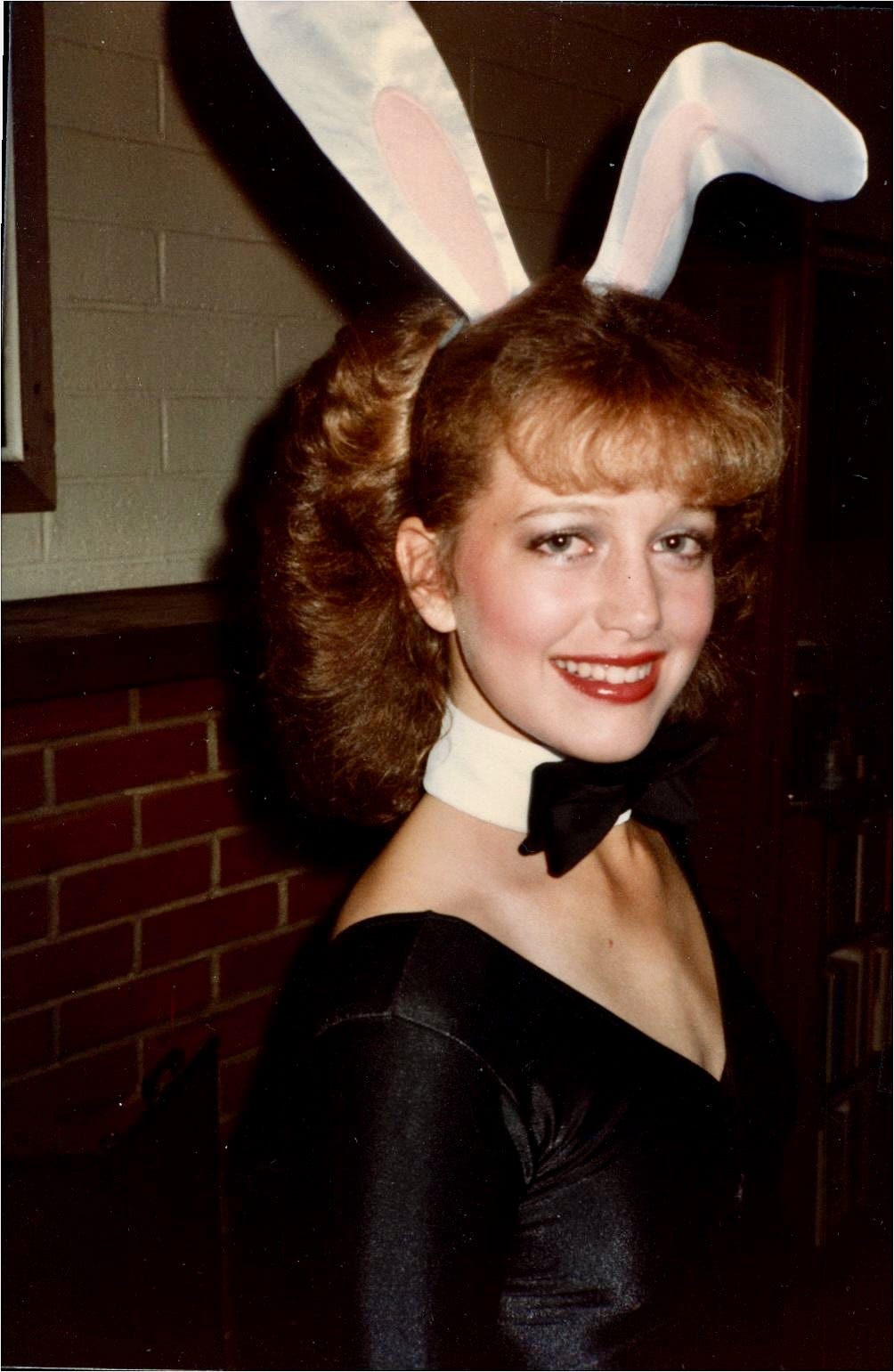
We walked down the green-shag hallway to the living room to show Mom and Dad and to take photos. Dad let out a deep, approving, “Whoa-ho-ho!” while Mom said, “Foxy lady! I wouldn’t recognize you.”
When Dad got his camera and the flashbulb started popping, he said, “Turn around and bend over,” so I did, shaking my puff of a bunny tail, and he roared, “Buns! We’ll call you Buns,” and later he captioned all my costume photos in the family album as “Buns,” and the nickname stuck so that his golfing buddy started calling me “Buns” too.
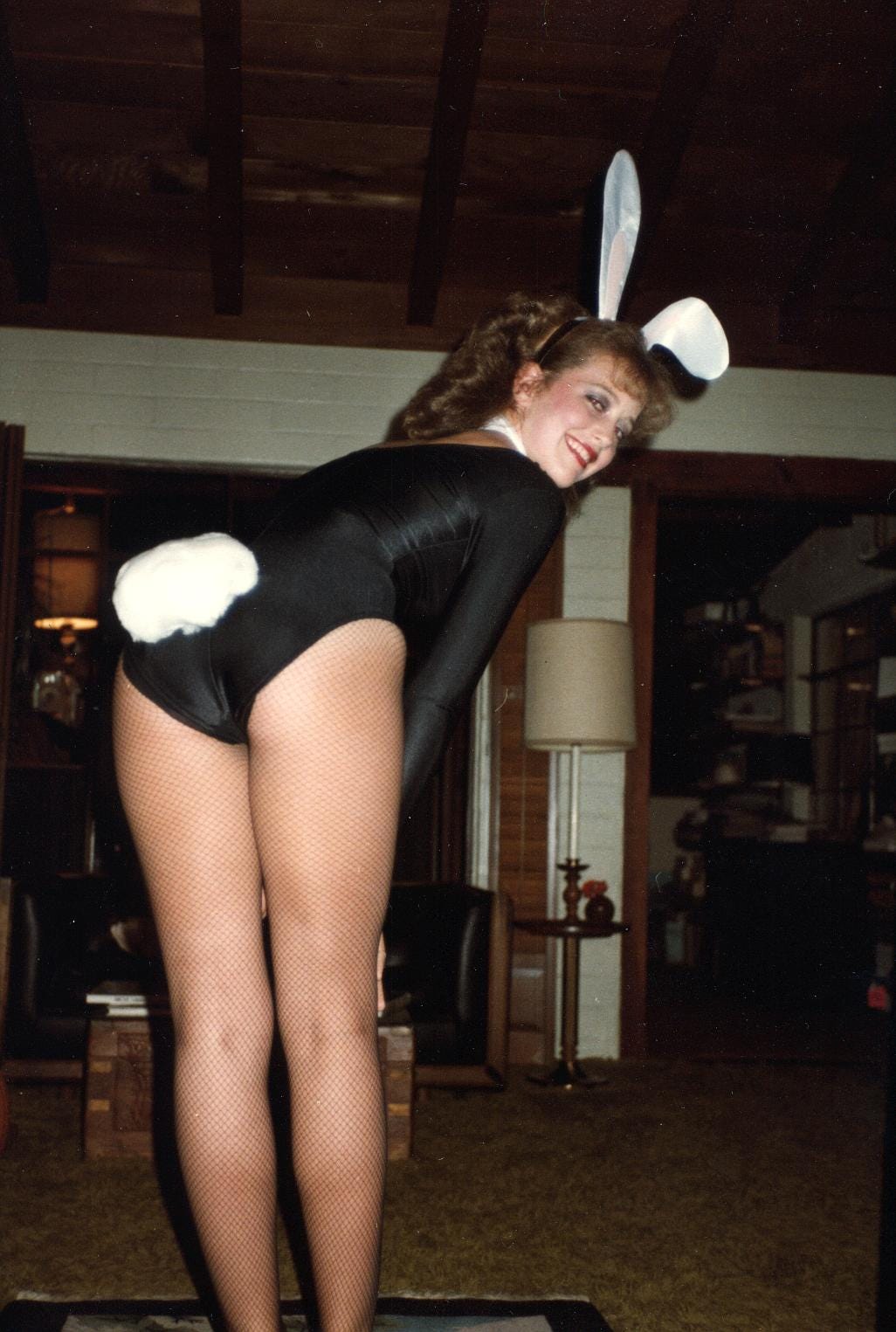
The Halloween dance at Matilija Junior High in Ojai reminded me of the scene from Grease when John Travolta goes bug-eyed when he sees Olivia Newton-John’s bad-girl makeover.
A bunch of boys turned and stared at me, but they didn’t make fun of me. They asked me to dance instead. One boy cupped my butt as we slow danced—my first slow dance—to REO Speedwagon’s “Keep On Loving You.” The cheerleaders accepted me into their circle to dance and sing to the Go-Go’s “Our Lips Our Sealed.” I was in the best scene from the best Judy Blume book when everyone decides to be nice to the loser.
The next morning, I was back to normal wearing an i-Zod shirt and Levis, trying to flatten my hair with barrettes and entering school with bits of alfalfa in my cuffs and traces of manure on my shoes from feeding my horse. The boy I danced with wouldn’t make eye contact. The cheerleaders ignored me. But I nurtured the feeling from the dance and became determined to make the makeover permanent, especially when I entered high school—a private school with a new batch of peers.
By high school, looks mattered to me more than academics, and I never was encouraged to be sporty so I didn’t participate in sports—I only rode my horse. Looking pretty, fitting in, and getting guys to make out and then letting them go all the way became my top priorities. I aspired to become a model, and no grownup suggested that was a wrongheaded idea, so I signed up with the agency in Santa Barbara where Kathy Ireland got her start.
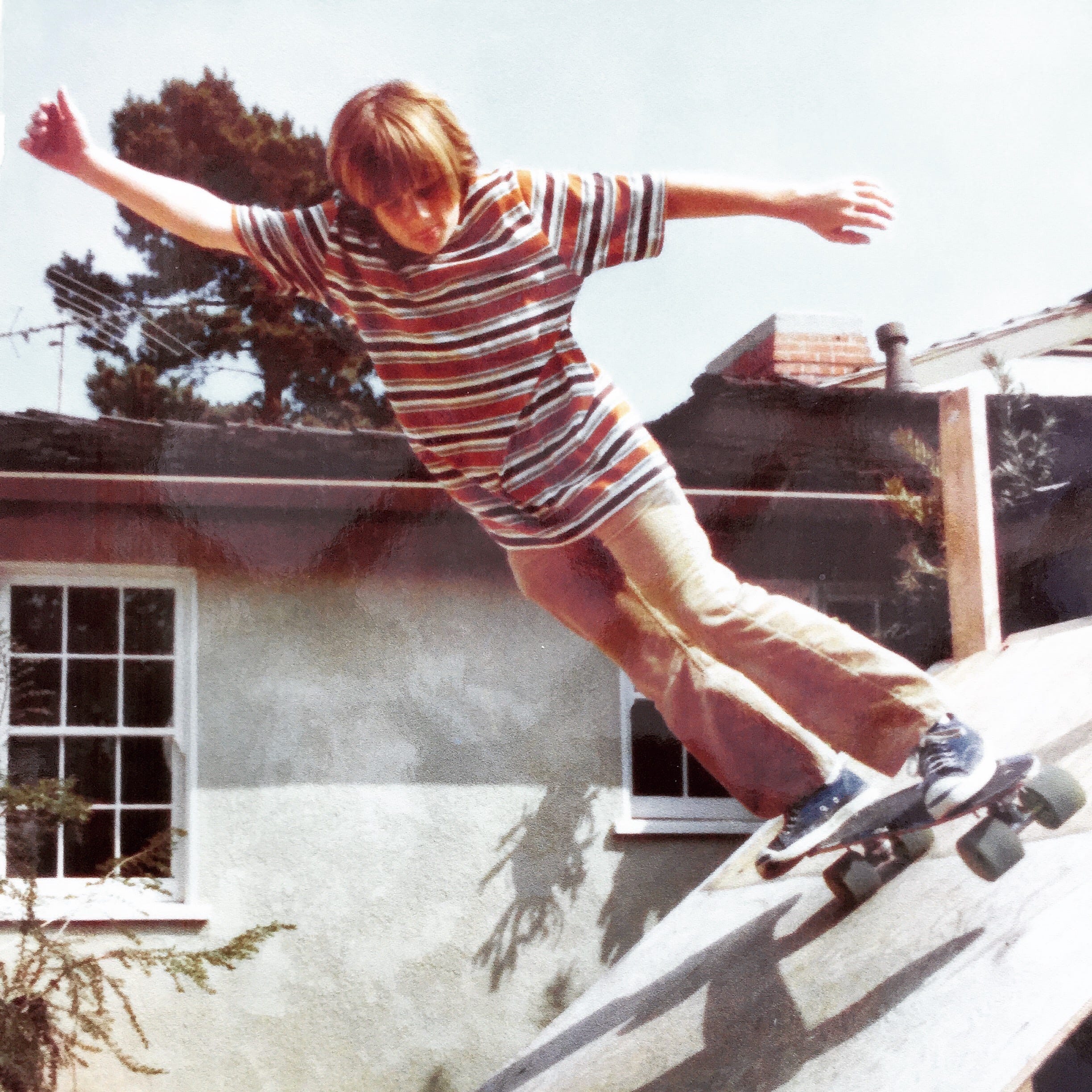
In another universe, I might have continued down that path. But in the fall of my junior year, I got to know a short weirdo skateboarding guy who was in the senior class and hung out with me when I studied. We had conversations like I’d never had with any boy, about things like Dostoevsky and apartheid and Pink Floyd. Being with him lit up my brain. We shared a stolen cigarette on October 5 of 1984, and he kissed me gently, not asking for more. Our relationship prompted me to go goth my senior year and Deadhead during college—my way of rebelling against looking pretty, skinny, and mainstream.
I don’t regret the bunny costume because of the special night it sparked, but I do regret that my parents and other adults, along with the culture of the time, encouraged me to develop into a sexy, submissive, superficial teen. Looking back, I understand how much early-life experiences shape our self-image for life. As a parent raising my daughter and son, I was hyper aware and worried that I may cause or fail to prevent lifelong insecurities and damage them in some way, which is why I feel pride and relief that they both seem content and healthy in their mid-twenties, and we share a line of communication that I never had with my parents.
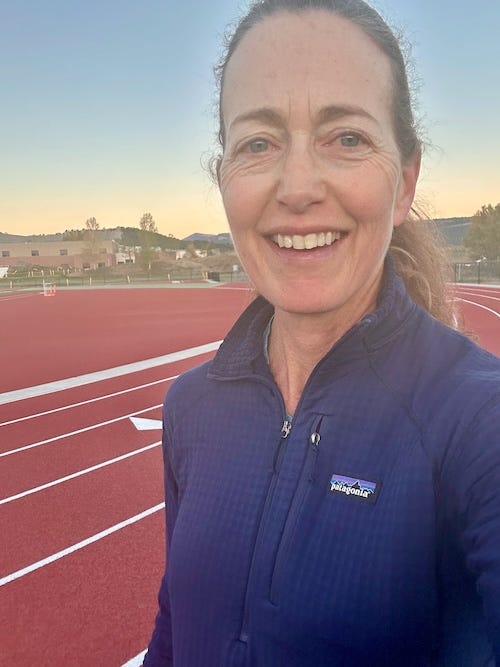
The happy ending is this: forty-one years later, I’m still together with the short weird former skateboarder. And I still feel better every time I run.
I think we all have stories of self discovery, regret, and eventually finding our way. I don’t know why our brains are so wired for social acceptance and fitting in. I had overcome and outgrown so much of that, but then going to grad school at almost 40 with classmates half my age was brutal. I always appreciate your vulnerability and willingness to share. Glad you found the deep thinking skater kid 😀
What a great piece Sarah! Dressing up and praise bring up complicated feelings for so many. I too used running as a form of escape at first, before realizing how much more it could bring to my life. Thank you for sharing your journey.