
The Life-Changing Event
A special announcement plus ultra updates and advice
Before I share this week’s commentary and links, I’d like to make a pitch for support. Paid subscribers receive occasional bonus posts; for example, I published a story for them yesterday about a recovered memory of a mountain race. I also host a monthly Zoom where we chat and sometimes do a Q&A with a special guest. I hope you will consider upgrading your subscription to the supporter level. I’d greatly appreciate it!
Two big announcements, related
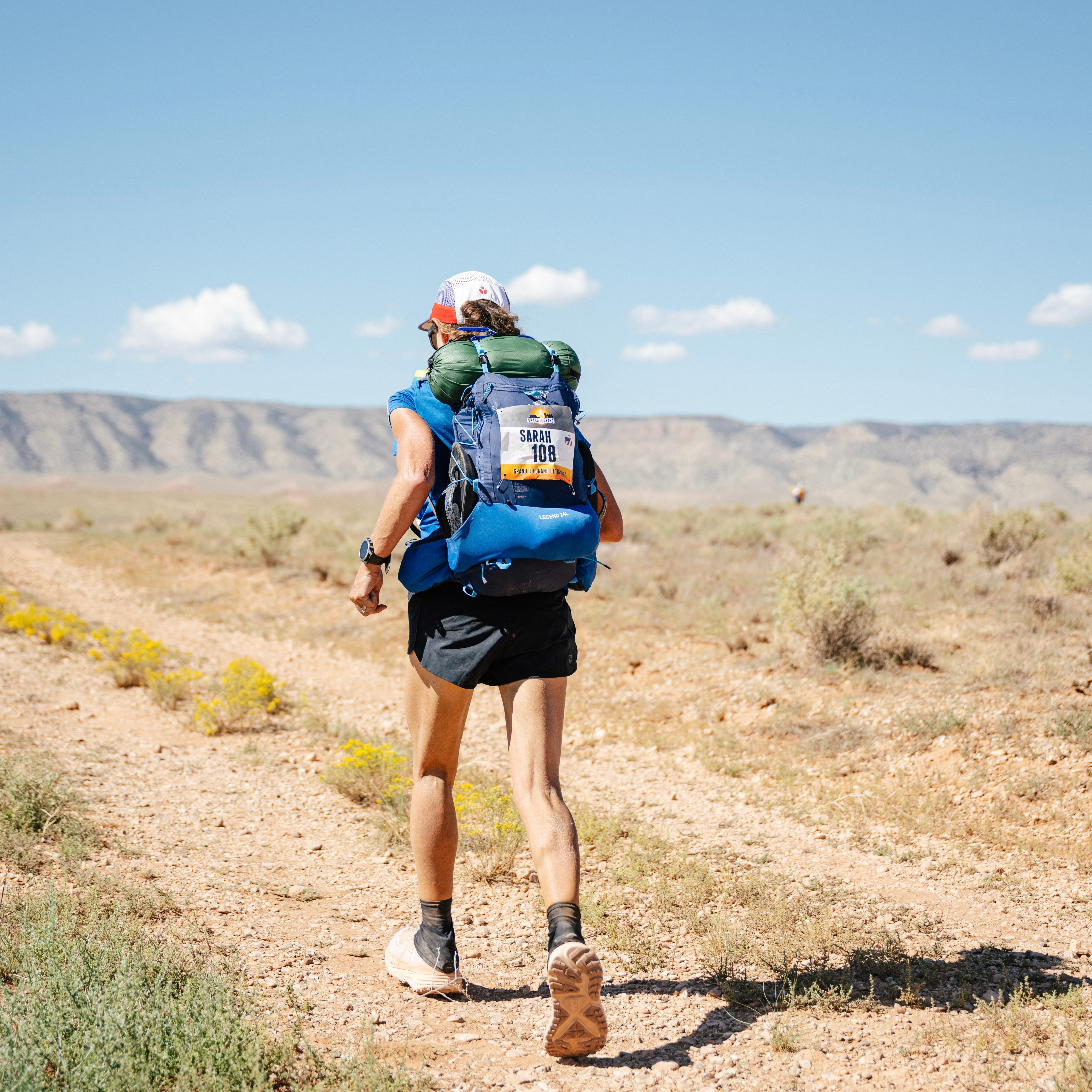
If you’re relatively new to this newsletter, you probably don’t know about my relationship with a special endurance event—a weeklong, self-supported, off-the-grid 170-mile stage race called the Grand to Grand Ultra. I participated in it four times (2012, ‘14, ‘19, ‘24; plus, I did the organizers’ one-time spinoff in 2017 on Hawaii).
I’m not exaggerating when I say this event shaped my adulthood. Each edition was a kind of vision quest and affected not only my development as a runner but also my character, relationships, and choices I made after I returned home.
Here’s the first of many teaser videos they made, based on the inaugural year’s footage, less than two minutes long to give you an idea of what it’s about:
Last week, I and other Grand to Grand Ultra alumni received a message that the event founders are retiring from race directing it, and therefore 2027 will be the final Grand to Grand Ultra, unless another entity takes it over. Founders Tess and Colin Geddes have worked incredibly hard to build and maintain the event, so I imagine they’re just plain tired after 14 years of making this logistically complicated event happen. I also suspect the event is struggling to compete with the popularity of single-stage 200-milers.
The Grand to Grand Ultra’s commitment to a “digital detox,” during which competitors are offline for a week, is a big part of what makes it special (along with the incredible remote landscape). The event also is crew-less and spectator-less. Those factors (which I love, as it puts the competitors “out there” and self-reliant) hampers its ability to compete with heavily covered online events such as Cocodona 250 and the Mammoth 200, which have loads of support and spectators, and many runners stay glued to their phones during them.
I truly hope the Grand to Grand continues under a new race director who shares Tess and Colin’s vision. But there’s a good chance the 2027 edition, September 19 - 25, will be its last run. So if you have any interest in it, now is the time to sign up! Registration opened Monday, and the slots likely will fill (many alumni want to run it again). You can learn more and sign up at g2gultra.com.
As tempting as it is, I’m not going to do it again. 2024 truly was my last time competing there. But, I have signed up to volunteer! I want to be there for the week-plus and support all the other runners on their odyssey.
So here’s the second part of my announcement …
I wrote a book based on the Grand to Grand Ultra, and it’s under contract to be published in early 2028!
I used the two weeks in September of 2024, when I traveled to Utah and competed in the Grand to Grand Ultra for a fourth and final time, to frame my midlife adventure memoir. The story, following the preparation and execution of the race, reflects on my upbringing and past pivotal choices as I traverse the desert and grapple with reasons for running. More than an ultrarunning story, it’s a love story that tracks a 40-year relationship with my husband and shows how my need to run both tested and fortified my identity and our bond. It explores and tries to resolve the unmet needs and insecurities that propel me to chronically leave home to run ultras.
One early reader described it as, “an incredible story that goes well beyond a typical endurance memoir, using the brutal miles of the Grand to Grand 170-mile stage race to unpack a lifetime of motivation, missteps, and self-doubt. Sarah is at her best when she’s honest about the double edge of ultrarunning—how it pulled her away from one set of destructive behaviors while subtly feeding another.”
I wish the Grand to Grand Ultra would still exist in 2028 and beyond, because I imagine my story might inspire others to do it. But I’m glad it will pay homage to this truly unique event and document what it was like while it lasted. Who knows, maybe my book will stir interest in resurrecting it.
I’ll for sure share more about the forthcoming book over the next 18 months.
A reminder not to compare your training with others
“Older and wiser” sounds optimistic and aspirational, but in reality, I repeat past mistakes or fall into a trap of unhelpful thoughts when I objectively know better from experience. That happened in the past week or so when I spiraled into discouragement and insecurity about perceived under-preparation and under-training for the August 14 San Juan Softie 100. I feel in 50K or 50M shape, but 100M?
Interaction with a few elite-level runners durning races in recent weeks, and on Strava, triggered my doubt, which is overblown, I know. I have never been a high-volume runner, and I have the results and longevity in the sport to prove that has worked for me, but still, when I see several people training close to or at 100ish miles/week, I seriously doubt my 40- to 60-mile/week volume for 100-mile prep.
A well-written post by coach Jason Koop landed in my inbox at just the right time. I’ve followed his coaching advice via his book for years. He wasn’t telling me anything I didn’t already know. But I needed his reminder.
His timely post was headlined, “How Much Do You Need to Train for a 100-Mile Ultramarathon?” I encourage you to read the whole post, especially the final section, “What to Do with the Training Time You Have.”
Here are some of his points that brought me relief and made me smile:
“Here’s the flawed logic that keeps aspiring ultrarunners on the sidelines: If marathon training takes 8 hours a week, then a 50-miler must take 16. Training for a 100-miler must take even more. That reasoning seems entirely sound, but it’s 100% wrong. … A 100-miler does not require twice the training of a 50-miler. … High weekly mileage isn’t the cornerstone of effective ultramarathon training. Highly consistent training – stacking weeks and weeks of sustainable training volume – is what counts.”
Koop reminded me to reframe my training volume in hours, not miles, and to consider the minimum time needed for 100-mile training, which he estimates at 9 hours/week for at least six consecutive weeks, starting nine weeks before your goal event.
By that measure, my training has been good enough.
I’ll do a final long run on Saturday—the Aspen Backcountry Marathon, which I signed up for to have a supported long run and to see new trails—then it’s taper time.
Why am I running this 100-miler? The reasons are many and complicated, but Brendan Leonard boils down the essential reasons in this beautiful new two-minute video he made, complete with handwritten rather than generated captions.
Races give me a reason to train. But really, like Brendan says, I train for the continued ability to run again. It’s about longevity. It’s about realizing again and again that I actually like it and am so grateful I can. Here’s how he puts it:
Safety advice following a tragedy
I’m haunted by Sunday’s news of a 15-year-old boy being struck by lightning and dying while hiking on a mountain in Colorado’s front range. He was trying to protect his younger brother, who was seriously injured in the strike.
A few years ago, I wrote an article about lightning safety for a local hiking company. Coincidentally, they repurposed and sent out the story via email a few days ago, so I refreshed my knowledge on how to stay safe in an electrical storm. Since afternoon monsoons have returned here (with much-needed precipitation), I’m hearing thunder and seeing lighting nearly every day. I made the choice on my run today to stay below timberline because of it.
You can read my article on how lightning works, why heat waves can increase thunderstorms, and what to do when lightning moves overhead here.
Today’s newsletter is shorter than usual because I’m departing early Wednesday on a training run to scout a section of the 100-mile route that I’ll traverse in the dark on the night of August 14. I’m following the lightning-safety advice to “start early and descend early.” I’ll return to storytelling next Wednesday!
Hey Sarah, congratulations on the book deal! I can’t wait to read it.
Ever since I learned about your experience at Grand to Grand Ultra, I’ve had that race in the back of my mind. Hmmm…
And thanks for sharing Jason Koop’s advice. I really appreciated it. I’m also more of a low-mileage runner, peaking around 50 -60 miles a week as I train for my upcoming 100-miler, so it was reassuring to read that perspective.
Best of luck in your 100, enjoy the taper and thanks, as always, for sharing your journey!
Congrats on the book deal! I’m sure it will be amazing :)